Volvo Cars

Volvo Cars
Volvo Cars app remote car control safety Swedish design owners
Screenshots
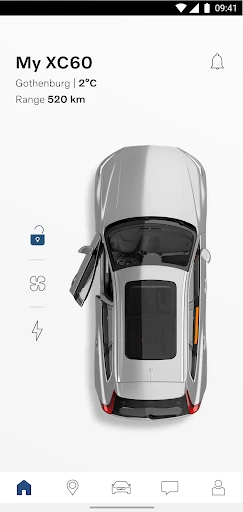
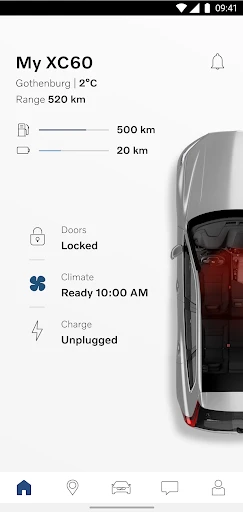
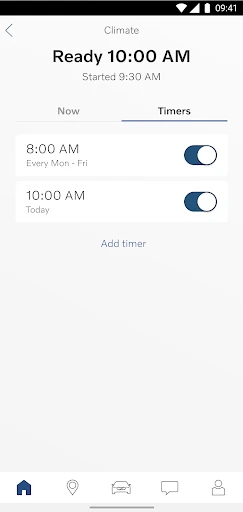

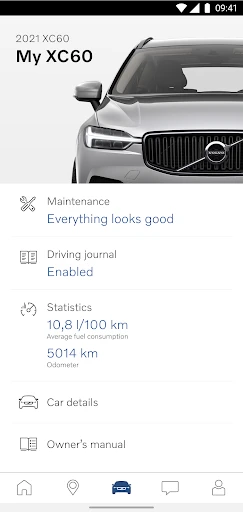
Volvo Cars: A Connected Driving Experience
The Volvo Cars app is a companion application designed to enhance the ownership and driving experience for Volvo vehicle owners. It serves as a centralized digital platform that connects the driver with their car, offering remote control, vehicle status monitoring, and personalized services. The app aims to provide convenience, safety, and peace of mind by integrating seamlessly with the vehicle's advanced systems, allowing users to manage their car from anywhere via their smartphone.
Chapter 1: Function
The app's core functions focus on remote vehicle management and real-time monitoring. Users can remotely lock or unlock the car doors, pre-condition the cabin temperature by activating the heater or air conditioner before entering, and locate the parked vehicle via GPS mapping. It also provides key vehicle status information, such as fuel level, battery charge for electric models, and tire pressure alerts. Additionally, the app supports sending navigation destinations to the car's infotainment system, scheduling service appointments, and accessing the owner's manual digitally. For electric and plug-in hybrid models, it offers charge scheduling and start/stop functionality directly from the phone.
Chapter 2: Value
The Volvo Cars app delivers significant value by prioritizing user safety, convenience, and peace of mind. Its primary advantage is the elimination of physical constraints; users can manage their car remotely, which is particularly beneficial in extreme weather conditions by pre-heating or cooling the interior. The app enhances security through remote locking and location tracking, reducing concerns about vehicle theft or misplacement. For electric vehicle owners, it simplifies charging management by allowing users to monitor battery status and schedule charging during off-peak hours to save costs. The app also adds value by streamlining maintenance; service reminders and booking features help owners maintain their vehicle efficiently, potentially extending its lifespan. Moreover, data integration with the vehicle’s health systems alerts users to potential issues before they become critical, fostering a proactive approach to car care. By centralizing control and information, the app transforms the car into a connected, smart device that adapts to the user’s lifestyle, thereby increasing overall satisfaction with the Volvo ownership experience.
Chapter 3: Scenarios
The primary target user groups for the Volvo Cars app are current Volvo owners, particularly those with newer models equipped with connectivity features. This includes both internal combustion engine vehicle owners and electric or hybrid vehicle drivers. Everyday use cases include a commute scenario where a user remotely starts the climate control to defrost windows on a cold winter morning before heading out to work. Another scenario involves a busy parent who uses the app to check whether the car doors are locked after parking at a crowded shopping mall. For long trips, the driver might send a navigation address from their phone to the car system during lunch preparation. Electric vehicle owners frequently use the app to monitor charging progress at a public station and remotely trigger charging to start or stop as needed. Additionally, service-oriented scenarios include scheduling a routine oil change or receiving a notification about a low battery that prompts a visit to the dealer.
Advantages
- voice-controlled cabin temp & seat adjustment
- Google built-in maps & assistant work offline
- Pilot Assist adapts to traffic without subscription
- Ozone cleaning cycles cabin before entry
- Blind spot camera feeds directly to instrument cluster
Disadvantages
- Setting climate presets requires multiple menu taps
- No native wireless CarPlay — wired only
- Navigation rerouting lags in dense city areas
- Battery preconditioning not schedulable remotely
- Parking sensor sensitivity triggers false alerts often
Frequently Asked Questions
Q: What does the Volvo Cars app do?
A: The Volvo Cars app allows you to remotely control and monitor your Volvo vehicle via smartphone. Core functions include locking/unlocking doors, pre-conditioning cabin temperature, locating your car, checking fuel or battery status, and scheduling service appointments. It supports electric and hybrid models with additional battery management features.
Q: Is the Volvo Cars app free to use?
A: The app is free to download and use for basic functions, but full features require an active Volvo On Call subscription or connected service plan, which may have costs depending on your vehicle model and region. No additional equipment is needed beyond a compatible smartphone and a paired Volvo with built-in connectivity.
Q: Does the app work with all Volvo models?
A: No, the app is compatible only with Volvo models from model year 2015 onward that have Volvo On Call or Sensus Connect built-in. Electric vehicles like the XC40 Recharge and C40 Recharge are fully supported. Older models or those without factory-installed telematics cannot use the app. Check your VIN on Volvo’s website for compatibility.
Q: How do I fix the app not connecting to my car?
A: First, ensure your car has an active cellular connection and is in an area with good coverage. Restart both the app and your smartphone, then verify Bluetooth is enabled if required. If the issue persists, check your Volvo On Call subscription status or delete and re-pair the car in the app under Settings > Manage Vehicles.
Q: Can I use the app to start the engine remotely?
A: Yes, on compatible models with an active subscription, you can start the engine remotely via the app for pre-conditioning the cabin. This works on gasoline, diesel, and hybrid vehicles. Electric vehicles allow climate pre-conditioning without engine start, using battery power. The feature is limited to two remote starts per ignition cycle in some markets.
Technical Information
Recommended for You

iFnovel - Books,Web Novel

Bojangles

Icon Changer And Icon Editor

Zepp

Weather Forecast: Live Weather

Phone Tracker

Hisense TV Remote

Popsa | Print Your Photos

Super Slime Simulator: DIY Art

TuneIn Radio Pro - Live Radio

PinPal

Дом с Алисой
Bible (King James Version)

Microsoft Copilot

Breaking News - Live Headlines

Cync (the new name of C by GE)

Beauty Camera Selfie Makeup

Picsart AI Photo Editor, Video

[KNA008] COMBINE

Asana: Where work connects

AI Video Maker - Renderforest

iReal Pro

Depop - Buy & Sell Clothes App