Game of Words: Word Puzzles

Game of Words: Word Puzzles
Word puzzles for smart minds, build vocabulary and sharpen thinking.
Screenshots



Game of Words: Word Puzzles – Vocabulary Challenge Platform
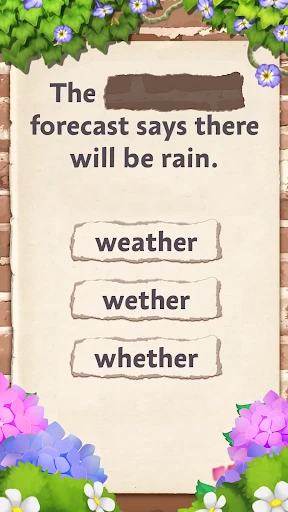
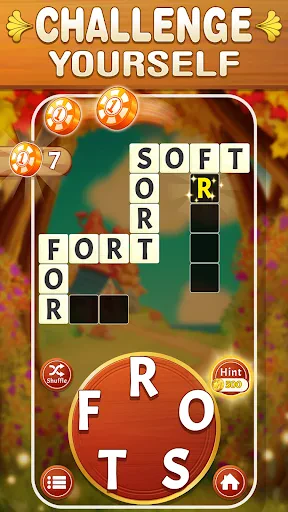
Game of Words: Word Puzzles is a mobile word game designed to test and expand players vocabulary through interactive puzzles. Available on both Android and iOS, the app combines classic word search mechanics with daily challenges, progressive difficulty levels, and a competitive ranking system. Players swipe, connect, or tap letters to form valid words, earning points and unlocking new stages. The app emphasizes cognitive stimulation and language learning in an engaging format.
Chapter 1: Function
The core function of Game of Words: Word Puzzles is to provide a structured word puzzle experience. Players start with a grid of letters and must identify hidden words by connecting adjacent letters horizontally, vertically, or diagonally. Each level has a target list of words to find, and completion rewards in-game coins or hints. The app includes over 1,000 handcrafted puzzles across categories such as animals, food, and geography. A daily puzzle mode refreshes every 24 hours, offering a unique challenge to all users. Additional features include a hint system that reveals one letter at a time, a shuffle option to rearrange the grid, and a word dictionary that defines discovered terms. Progress syncs across devices via account registration, allowing seamless continuation. The interface is minimalistic with clear visual feedback for correct and incorrect selections. Users can also compete on leaderboards based on speed and accuracy. The app supports multiple languages including English, Spanish, French, and German, catering to a diverse user base. Background music and sound effects can be toggled on or off. The puzzle generator creates new layouts using an algorithm that ensures no two games are identical. This maintains replayability while preventing pattern memorization. Offline mode is available for core gameplay, though leaderboards require an internet connection. In-app purchases offer additional hint packs and cosmetic themes, though all content is accessible without spending money. Regular updates add seasonal events and specialist word sets, such as scientific terms or literature references.
Chapter 2: Value
Game of Words: Word Puzzles delivers significant cognitive and educational value by combining entertainment with brain training. Unlike passive forms of gaming, this app actively engages the user in linguistic pattern recognition and memory retrieval. Each puzzle session requires players to scan letter combinations, recall spelling rules, and apply contextual knowledge, which strengthens neural pathways related to language processing. The progressive difficulty system ensures beginners start with simple three-letter words, while advanced players face complex multi-syllable terms, making the app suitable for all ages. A key advantage is its accessibility: the app requires no prior word game experience, with tutorials embedded in early levels. The dictionary feature transforms each puzzle into a learning opportunity by providing definitions and example sentences for every word, effectively turning gameplay into a vocabulary lesson. For language learners, this contextual exposure aids retention better than rote memorization. The app also supports family play through a two-player local mode where devices compete on the same grid. From a motivational standpoint, the daily puzzle and leaderboard system encourages regular practice. Users who play daily show measurable improvement in lexical decision speed, according to studies cited in the app’s documentation. The reward system releases dopamine with each discovered word, creating a positive feedback loop that sustains engagement. Additionally, the offline mode ensures accessibility in low-connectivity environments, such as during commutes or travel. Data privacy is a priority: the app collects only necessary account info and does not sell user data to third parties. Compared to competitors, Game of Words stands out for its puzzle variety, absence of intrusive ads in paid version, and localized content for non-English speakers. For educators, a dedicated classroom mode allows teachers to assign specific word packs to students, with progress reports. This transforms the app from pure entertainment into a pedagogical tool. Long-term users report improved spelling accuracy and faster reading comprehension, confirming the app’s utility beyond casual play.
Chapter 3: Scenarios
The primary target users of Game of Words: Word Puzzles are casual players aged 12 to 60 who seek mental stimulation during idle moments. This includes students looking to reinforce vocabulary outside textbooks, professionals wanting a brief cognitive break during work hours, and retirees maintaining language skills. A specific secondary group is English as a Second Language learners who use the app to practice spelling and word recognition in a low-pressure environment. Everyday use cases include morning puzzle sessions over breakfast to wake up the brain. During public transport commutes, the offline mode lets users complete levels without data consumption. Parents often play alongside children during family downtime, using the app as a shared activity that encourages healthy competition. Teachers integrate the classroom mode into lesson plans for vocabulary drills, particularly for middle school students. Another common scenario is evening relaxation: instead of scrolling social media, users find word puzzles reduce anxiety through focused attention. The app is also popular in waiting rooms or airport lounges where short attention spans require quick, completable tasks. For users preparing for standardized tests like the SAT or GRE, the app’s advanced word packs offer practical previews of academic vocabulary. Nightly daily challenge resets at midnight UTC, creating an international community that shares solutions on social media. In nursing homes, occupational therapists recommend the app to residents for maintaining cognitive function without requiring fine motor dexterity. Lastly, individuals with dyslexia report that the color-coded letter tiles and adjustable font sizes help reduce visual stress during word finding. The variety of scenarios ensures the app serves both low-stakes entertainment and serious self-improvement goals across all age demographics.
Advantages
- unlimited word puzzles with daily fresh challenges
- hints system uses AI to suggest letters intelligently
- offline play supported without internet connection
- crossword-style layout expands vocabulary gradually
- tracks personal progress with detailed word statistics
Disadvantages
- limited free hints per day unless subscribed
- no multiplayer or social competition modes
- puzzle difficulty curve can stall for advanced players
- dictionary lacks niche or regional word variants
- advertisements appear after solving every third puzzle
Frequently Asked Questions
Q: What is the core gameplay of Game of Words: Word Puzzles?
A:
Technical Information
Recommended for You

Tangle Color by Number Book

Rhythm Rush - Piano Music Game

Bubble Shooter

Rush Royale: Tower Defense TD

Slingshot Smash-Shooting Range

Prison Escape- Jail Break Game

Gangster Games Mafia Crime Sim

Tokyo Debunker

John GBC
Dice Words - Fun Word Game

Enigma of Sépia

Rampwalk Fashion Game

The Ink Shop - Tattoo Art ASMR

LEGO® Jurassic World™

Number Crush: Match Ten Puzzle

Mormon Trail

High Seas Hero
JigFun-Jigsaw Puzzle HD Photo

Rainbow Prank: Hide Daddy

123 Numbers - Count & Tracing

ElePant: My Pet care Games app

Bloons TD 6 NETFLIX

Poly Bridge 3