PulsePoint Respond

PulsePoint Respond
PulsePoint Respond alerts nearby CPR trained users to save lives
Screenshots
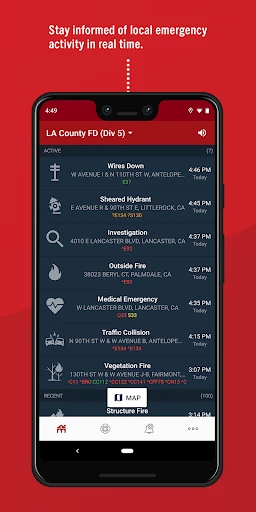
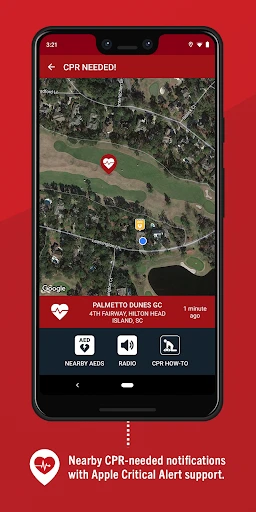

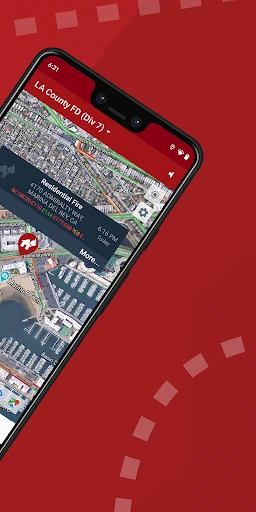

PulsePoint Respond: Real-Time Emergency Alerts and Community Aid
PulsePoint Respond is a mobile application designed to enhance emergency response systems by connecting trained bystanders with nearby cardiac arrest victims and other critical incidents. The app integrates with local 911 dispatch centers to provide real-time alerts, enabling immediate CPR intervention before professional responders arrive. It also displays the locations of nearby automated external defibrillators, or AEDs, to facilitate rapid access. Beyond cardiac emergencies, PulsePoint provides situational awareness for fires, accidents, and other public safety events, empowering users to become active participants in community safety. The platform functions as a digital infrastructure that bridges the gap between official emergency services and ordinary citizens.
Chapter 1: Function
PulsePoint Respond delivers two primary core functions: cardiac arrest alerts and incident awareness. For cardiac alerts, the app automatically notifies users when a cardiac emergency is reported within a designated proximity, typically within a quarter-mile radius. The alert includes the specific location of the victim, such as a building entrance or public space, and prompts the user to begin CPR immediately if they are willing and able. Simultaneously, the app maps the location of nearby registered AEDs, guiding the volunteer directly to the device. For the incident awareness function, the app displays a live feed of active emergencies, including structure fires, vehicle collisions, and HazMat incidents. Users can view these incidents on an interactive map, which updates in real-time based on data from participating dispatch centers. This feature does not require user action but provides valuable information for avoiding danger zones or preparing for potential disruptions. The app also includes a filter to sort incidents by type and severity, allowing users to focus on events most relevant to their role or location.
Chapter 2: Value
PulsePoint Respond offers substantial value by dramatically reducing the time between cardiac arrest and lifesaving intervention. In a typical cardiac emergency, survival rates decrease by 7 to 10 percent for every minute without CPR. By alerting trained bystanders who may be just steps away from the victim, the app can cut this response time by several minutes, significantly increasing the probability of survival. The key advantage lies in its crowd-sourced, location-based alert system that leverages existing infrastructure, like 911 dispatch, without requiring extra hardware. Furthermore, the AED location database is community-maintained and validated, ensuring that users are guided to functional devices rather than misplaced or outdated equipment. This feature is critical because even when AEDs are present, location confusion often delays their use. Another major advantage is transparency: the app allows citizens to see exactly where and when emergencies occur in their community, fostering a culture of proactive safety rather than reactive fear. For individuals with medical training, such as off-duty doctors, nurses, or EMTs, PulsePoint transforms them into a mobile first-responder network. For the average user, it provides peace of mind, knowing they have the tools to act quickly in a crisis. The app also benefits emergency dispatch centers by reducing the burden of non-critical inquiries and improving community relations through visible engagement. Ultimately, PulsePoint builds a resilient community where every citizen becomes a potential lifesaver, directly addressing the critical gap in emergency medical response systems.
Chapter 3: Scenarios
PulsePoint Respond primarily targets two user groups: trained medical professionals and safety-conscious civilians. The first group includes off-duty doctors, nurses, paramedics, emergency medical technicians, and military medical personnel. These users are often within range of cardiac emergencies while going about their daily routines, such as commuting, shopping, or exercising. For example, a nurse shopping at a grocery store receives an alert that a person has collapsed in the checkout aisle. Using PulsePoint, she runs directly to the victim, begins chest compressions, and directs another bystander to retrieve the mapped AED. This scenario can occur at parks, airports, office buildings, or residential neighborhoods. The second group includes civilians who have completed CPR training or simply wish to be aware of community emergencies. A typical use case involves a parent monitoring the incident feed while at home to stay informed about a nearby structure fire, enabling them to decide whether to evacuate. Another common scenario is a jogger who encounters a collapsed person and uses the app to locate the nearest AED while calling 911. The app is also valuable for workplace safety officers, event organizers, and school staff who must maintain emergency preparedness. By integrating into existing daily life without requiring constant vigilance, PulsePoint transforms passive awareness into immediate, actionable response in diverse everyday environments.
Advantages
- maps nearby CPR-trained users to cardiac arrest locations
- integrates with local 911 dispatch systems for real-time alerts
- uses military-grade GPS to guide you within 200 meters
- requires no registration to receive emergency notifications
- battery-efficient background location mode for 24/7 standby
Disadvantages
- only functional in regions with active public safety partnerships
- silent mode may cause missed alerts during critical moments
- no offline map support if cellular network is down
- highly localized data; sparse coverage outside urban centers
- limited to cardiac emergencies; excludes other medical scenarios
Frequently Asked Questions
Q: What is PulsePoint Respond's core function?
A: PulsePoint Respond alerts nearby CPR-trained users of cardiac emergencies via real-time notifications. It integrates with local 911 dispatch systems to show AED locations and incident details. The app does not replace emergency services but aids in faster bystander response.
Q: Is PulsePoint Respond free to use?
A: Yes, the app is free to download and use. It has no in-app purchases or subscription fees. However, it requires a smartphone with GPS and internet access, and users must grant location permissions to receive nearby alerts.
Q: Which devices and systems support PulsePoint Respond?
A: The app works on iOS and Android devices. It requires iOS 13+ or Android 8+. System compatibility depends on local emergency dispatch integration; not all regions support the service. Users should verify coverage in their area via the app's map.
Q: Can PulsePoint Respond notify me during an emergency?
A: Yes, it sends push notifications when a cardiac emergency is reported nearby by participating dispatch centers. Alerts include incident location, patient details, and nearby AED locations. Users must enable notifications and location services for accurate alerts.
Q: Does PulsePoint Respond track my location continuously?
A: Location services are only active when the app is open or receiving an alert. The app does not track background location continuously. Data is used solely to match alerts to your vicinity and is not shared with third parties. Privacy settings can be adjusted.
Technical Information
Recommended for You

MGM Rewards

2ndLine - Second Phone Number

BlueDriver OBD2 Scan Tool

Necrometer

Barber Chop

FuturHealth

News Today

Sympla: Ingressos para eventos

SHEIN-Shopping Online

Wavy: Photo Editor & AI Art

Baby Tracker App | Glow

Meme Maker & Meme Creator

Hyde App Hider - Hide Apps

Volume Booster for Android

Buddy.ai: Fun Learning Games
Hypic - Photo Editor & AI Art

Adobe Capture: Illustrator,Ps

Nice Weather

JB4 Mobile

LiveWell with Advocate Aurora

Logo Maker And Logo Creator 3D

White Noise: Baby Sleep Sounds

BCBSTX