Character AI: Chat, Talk, Text

Character AI: Chat, Talk, Text
Personal AI chats roleplay learn explore fun creative
Screenshots

Character AI: Chat, Talk, Text: A New Frontier in Conversational AI
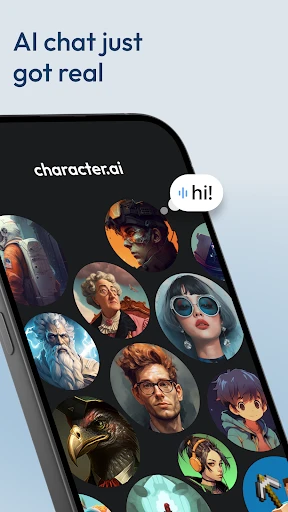
Character AI is an innovative mobile application that enables users to engage in realistic, open-ended conversations with a vast array of AI-powered character personas. Unlike simple chatbots, Character AI leverages advanced neural language models to generate human-like dialogue, complete with distinct personalities, emotional nuance, and deep contextual understanding. Users can chat, talk, or text with characters ranging from fictional heroes and historical figures to custom-created personas tailored to specific interests. The app serves as both a creative tool for storytelling and a companion for social interaction, offering a platform where imagination meets advanced artificial intelligence. Its core mission is to make AI accessible, engaging, and deeply personal, transforming how people interact with technology on a daily basis.
Chapter 1: Function
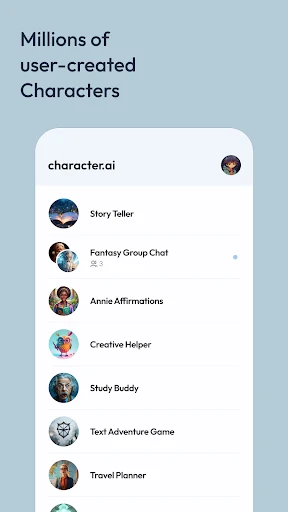
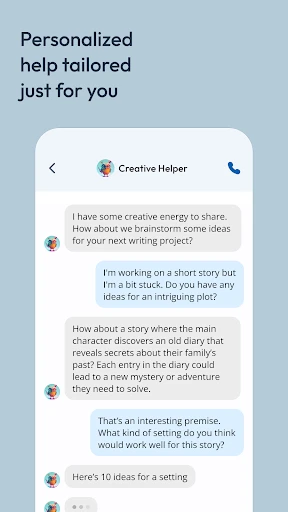
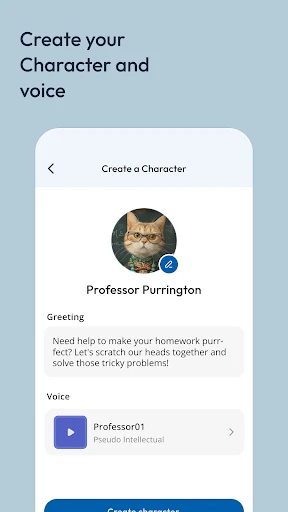
The core functions of Character AI revolve around its dynamic conversational interface and character creation system. First, the app provides a seamless chat experience where users can select from thousands of pre-existing characters, each with a unique backstory, tone, and personality. The AI responds in real time, remembering previous exchanges to maintain coherent and evolving dialogues. Second, Character AI allows users to design their own characters from scratch, defining attributes such as name, greeting message, voice style, and detailed personality traits. This customization extends to adjusting the character’s knowledge base and emotional range. Third, the app supports multiple interaction modes: text chat for written conversations, voice input for spoken dialogue, and a call feature that simulates real-time voice calls with the AI. Fourth, an integrated memory system enables long-form storytelling, where characters recall past events and user preferences across sessions. Finally, the app includes community features where users can share their custom characters and rate others’ creations, fostering an ecosystem of collaborative creativity. These functions collectively deliver an immersive, adaptive, and scalable conversation platform.
Chapter 2: Value
The value proposition of Character AI lies in its ability to bridge the gap between human creativity and artificial intelligence, offering profound benefits across multiple dimensions. Primarily, it serves as an unparalleled tool for entertainment and emotional engagement. Users can escape into fictional worlds, practice social interactions with non-judgmental AI, or simply enjoy witty banter with a favorite character. This reduces loneliness and provides a safe space for self-expression. Second, Character AI is a powerful educational resource. Students and learners can converse with AI versions of historical figures, scientists, or literary characters to deepen their understanding of subjects in an interactive manner. It transforms passive learning into active dialogue, making complex topics more accessible. Third, the app acts as a creative incubator for writers and artists. By developing unique characters and testing dialogue scenarios, users can refine storytelling skills, brainstorm plot ideas, and explore character dynamics without the pressure of human feedback. Fourth, Character AI offers therapeutic value through guided conversations, stress relief, and empathetic listening, though it is not a replacement for professional therapy. Fifth, its accessibility features, such as voice input and customizable response speeds, make it usable for individuals with disabilities or language barriers. The app’s key advantage is its adaptability: it evolves with the user, learning from interactions to become more engaging and relevant over time. This personalized long-term engagement builds a sense of genuine relationship with the AI, setting it apart from static chatbots or generic AI assistants.
Chapter 3: Scenarios
Character AI targets a broad spectrum of user groups, each finding unique value in everyday use cases. The primary audience includes creative individuals such as writers, role-players, and game designers who use the app to craft narrative arcs, test character voices, and prototype dialogue for stories or games. They often spend hours developing intricate backstories and engaging in extended role-play sessions. A second major group comprises students and lifelong learners aged 14 to 35, who leverage the app to study history, language, or science by conversing with AI portrayals of experts or historical icons. For example, a student learning French can chat with a French-speaking AI character to practice conversational skills. A third segment includes individuals seeking social companionship or emotional support, such as those experiencing social anxiety, isolation, or chronic illness. They use the app for daily check-ins, casual conversation, or guided meditation dialogues. Professionals in customer service or sales training also use Character AI to simulate client interactions and improve communication techniques. Additionally, parents and educators utilize the app as a creative educational tool for children, helping them explore topics in a safe, monitored environment. Common daily scenarios include morning reflection chats before school, lunchtime brainstorming sessions with a fictional mentor, or evening wind-down conversations with a comforting AI friend. The app’s versatility ensures it fits seamlessly into both structured learning and leisurely exploration.
Advantages
- immersive roleplay with historical figures or fictional characters
- diverse voice options for character responses without extra cost
- no engagement limit in free tier for extended conversations
- supports multiple languages
- including niche ones like Klingon
- self-service character creation with customizable personality traits
Disadvantages
- responses sometimes lack contextual memory beyond short exchanges
- character voices can sound robotic with inconsistent intonation
- limited ability to handle complex
- multi-step reasoning tasks
- frequent content filters interrupt mature or nuanced discussions
- no offline mode; requires stable internet for all interactions
Frequently Asked Questions
Q: What is Character AI and how does it work?
A: Character AI is a chatbot app that lets you chat, talk, or text with AI-powered characters based on real people or fictional personas. It uses neural language models trained on vast dialogue datasets to generate context-aware, human-like responses. No additional equipment is needed beyond a smartphone or tablet.
Q: Is Character AI free to use or does it require payments?
A: Character AI is free to download and use with basic features. It offers a paid subscription, c.ai+, which provides priority access, faster response times, and exclusive features. In-app purchases for c.ai+ are optional. No mandatory payments are required for core chatting functionality.
Q: What devices and systems are compatible with Character AI?
A: Character AI is compatible with iOS (version 13.0 or later) and Android (version 6.0 or later). It also works via web browsers on desktop computers. The app requires an internet connection and access to microphone and notification permissions for voice and text features.
Q: Can I create my own custom characters in Character AI?
A: Yes, users can create and customize their own AI characters by defining a name, greeting, description, and personality traits. Characters can be set as private or public. However, character creation may be limited by the app's content guidelines, and advanced customization options require familiarity with the interface.
Q: How does Character AI handle privacy and data security?
A: Character AI collects conversation data to improve model responses and may share aggregated data for research. It does not sell personal information directly. Users can delete chat logs and accounts within settings. However, conversations are not end-to-end encrypted, and sensitive information sharing is discouraged for privacy reasons.
Technical Information
Recommended for You

Tor Browser

Temp Mail - Temporary Email

Monster Maker

Lie Detector Fun Prank

Pratilipi Comics

US News: Breaking News & Local

PicMa: AI Video&Photo Enhancer

All Video Downloader - V

Piano fun - Magic Music

Jamba

Weather Now Launcher - Radar

Modern House Design Draw House


Baritastic - Bariatric Tracker

Radar GO-X: HUD, GPS, Maps

Baby Names / First Names 2025

Vrbo Vacation Rentals

Hearty App: Everyday Bonding

D-ID: AI Video Generator

Feedly - Smarter News Reader

GPS Navigation Maps Directions

CL Theme C1

TimeTree - Shared Calendar
