Proton Mail: Encrypted Email
Proton Mail: Encrypted Email
Privacy focused encrypted email for secure communication
Screenshots
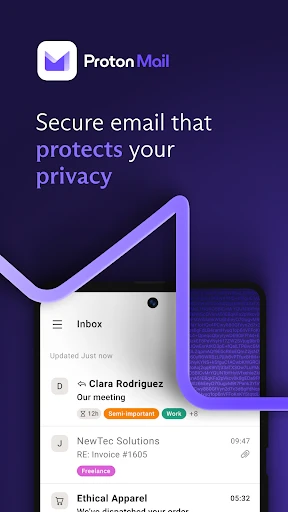
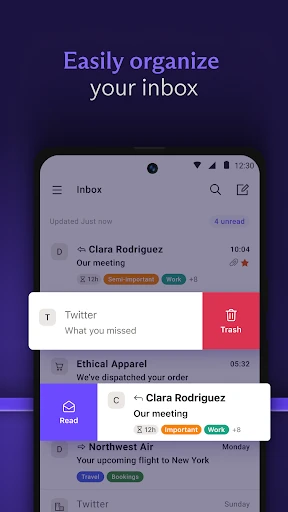
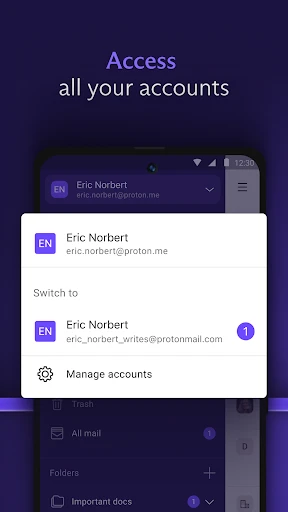
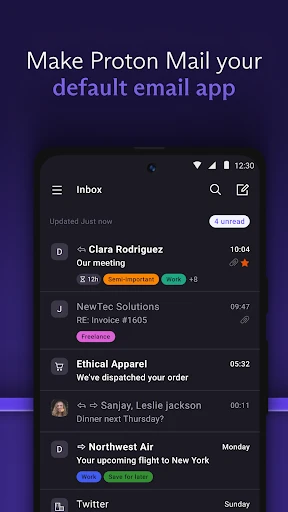
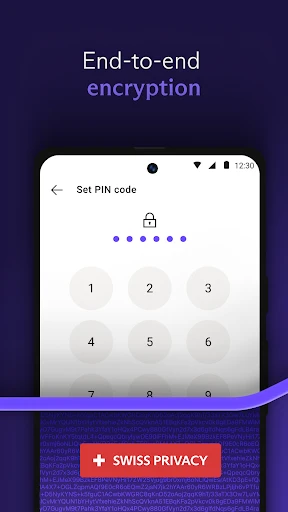
Proton Mail: Encrypted Email – Privacy-First Secure Communication
Proton Mail is a secure email service that uses end-to-end encryption to protect user communications. Founded by scientists from CERN, it is based in Switzerland and operates under strict Swiss privacy laws. The app offers zero-access encryption, meaning even Proton Mail cannot read user emails. It supports self-destructing messages, password-protected emails, and seamless integration with the Proton ecosystem, including VPN and cloud storage. Available on iOS and Android, it provides a straightforward interface for both personal and professional use, prioritizing user confidentiality and data security above advertising or data mining models.
Chapter 1: Function
Proton Mail provides encrypted email services through end-to-end encryption. Its core function is automatic encryption of all messages between Proton Mail users, ensuring only the intended recipient can decrypt content. For external recipients, the app offers password-protected emails with expiration times. The app includes a secure contact list, message expiration settings, and the ability to send self-destructing messages. It also supports PGP (Pretty Good Privacy) for compatibility with other encrypted services. Additional functions include a built-in calendar for encrypted scheduling, file attachments up to 25 MB (or larger with paid plans), and offline access to cached emails. Users can create multiple email aliases and manage folders effectively while maintaining zero-access encryption on all stored data. The search feature indexes encrypted data locally on the device, preserving privacy.
Chapter 2: Value
The primary value of Proton Mail lies in its absolute commitment to user privacy and data security. Unlike mainstream email providers that scan emails for advertisement targeting or data mining, Proton Mail operates on a subscription model without any surveillance. Its zero-access encryption architecture means no entity, including governments or employees, can access user content. This is reinforced by Swiss jurisdiction, which offers stronger privacy protections than many other countries. The app provides an auditable, open-source codebase, allowing security experts to verify its claims. Key advantages include automatic encryption that does not require technical knowledge, the ability to send encrypted messages to non-Proton users via password-based protocols, and the integration with Proton VPN and Proton Drive for a holistic privacy ecosystem. For journalists, activists, or businesses handling sensitive data, Proton Mail offers verifiable security guarantees including perfect forward secrecy, which prevents past communications from being decrypted even if a current encryption key is compromised. The service also prioritizes anonymous signup options, accepting Bitcoin and other non-traceable payment methods for enhanced anonymity.
Chapter 3: Scenarios
Proton Mail primarily targets users who require high-level email privacy, including journalists covering sensitive topics, corporate whistleblowers, human rights activists, and legal professionals handling confidential correspondence. Everyday use cases include secure communication between colleagues in privacy-sensitive organizations, encrypted transmission of medical documents between healthcare providers and patients, and confidential business negotiations. The app is also popular among tech-savvy individuals who use ProtonMail as their primary personal email to avoid data commodification. Another key user group is university researchers collaborating on projects with sensitive data. For field journalists in restrictive regimes, the app provides offline drafting functionality and minimal metadata collection, crucial for operational security. Additionally, it serves privacy-conscious consumers who want a reliable email alternative to Gmail or Outlook, offering standard email features without sacrificing security. The app's calendar integration supports encrypted booking for appointments with lawyers or therapists, while its alias system helps users separate personal and professional communications.
Advantages
- zero-access encryption keeps emails unreadable even to Proton
- self-destructing messages auto-expire after set timer
- anonymous signup requires no personal phone or backup email
- open-source code allows independent security audits
- built-in VPN and calendar in same encrypted ecosystem
Disadvantages
- free tier limited to 500 MB storage total
- no push notifications unless using paid app version
- search only works on subject lines
- not email body
- slower sync due to on-device decryption processing
- cannot import old emails from Gmail or Outlook
Frequently Asked Questions
Q: What is Proton Mail and how does it work?
A: Proton Mail is an encrypted email service based in Switzerland. It uses end-to-end encryption to protect your emails, meaning only you and your recipient can read them. No decryption keys are stored on servers, ensuring privacy even from Proton. It works like standard email but adds automatic encryption for messages between Proton users, and optional password-protected encryption for external recipients.
Q: Is Proton Mail completely free to use?
A: Proton Mail offers a free tier with 500 MB of storage, limited to sending 150 messages per day and one folder/label. Full features require a paid plan starting at €3.99/month, which includes more storage (15GB+), custom domains, aliases, and priority support. No in-app purchases; all upgrades are via subscription. No additional equipment is needed beyond a smartphone or computer.
Q: Does Proton Mail work on both Android and iOS?
A: Yes, Proton Mail has official apps for Android and iOS, available on Google Play and the App Store. It also works via web browsers on any device with an internet connection. System requirements: Android 6.0+ or iOS 14.0+. There is no dedicated desktop app for Windows or macOS, but the web version is fully functional. It supports all major email protocols (IMAP/SMTP) with Bridge for desktop use.
Q: How can I recover my account if I forget my password?
A: Proton Mail does not store your password or decryption keys, so password recovery is limited. If you forget your password, you can reset it using a recovery email or phone number if set up beforehand, but this will permanently lose access to encrypted messages. Without a recovery method, the account cannot be recovered. Enable two-factor authentication for added security.
Q: Can I send encrypted emails to non-Proton users?
A: Yes, you can send encrypted emails to non-Proton users by using 'Password-protected Emails'. The recipient receives a link to read the message in a secure Proton browser after entering a pre-set password. Emails are encrypted end-to-end during transit, but the recipient's data is not managed by Proton. Standard unencrypted emails to external addresses are also supported but not secured.
Technical Information
Recommended for You

Galaxy SmartTag

Lightroom Photo & Video Editor
Pydroid repository plugin
Status Saver: Video Downloader

99acres Buy/Rent/Sell Property

REALITY-Become an Anime Avatar

Ace Hardware

AutoScout24: Buy & sell cars

Widgeet-Color Widgets(Widget)

HD Movie Projector

Viki: Asian Dramas & Movies

CBS

TP-LINK tpCamera

Babysits - Find Babysitters

Samsung Food: Meal Planning

Hearing Clear: Sound Amplifier

IMDb: Movies & TV Shows

aTranslator - Text & Voice

SG SLS Type Camera
File Manager Box
Messenger SMS - Text Messages

EPIK - AI Photo & Video Editor

Cleveland19 FirstAlert Weather
