Baby Panda's Daily Habits

Baby Panda's Daily Habits
Baby Panda daily habits app teaches kids healthy routines through fun games
Screenshots

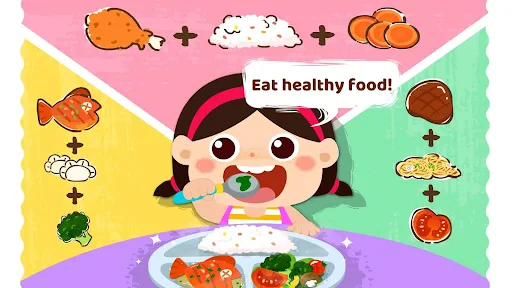

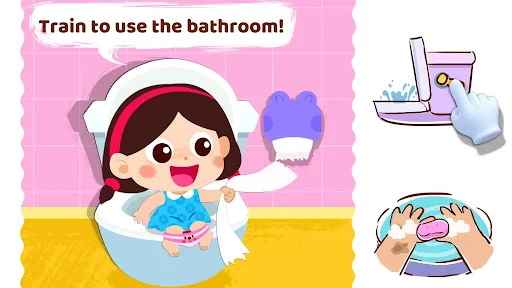

Baby Panda's Daily Habits: Building Healthy Routines for Kids
Baby Panda's Daily Habits is an educational mobile application designed for young children, typically aged 2 to 5 years. Developed by BabyBus, the app uses interactive gameplay to teach children essential daily routines, such as brushing teeth, washing hands, eating meals, and going to bed. Through playful animations and simple tasks, it helps toddlers understand the sequence of daily activities and encourages independence. The app is available on both Google Play and the Apple App Store, offering a safe, ad-free environment for early learning. It focuses on habit formation through repetition and positive reinforcement, making it a popular tool for parents seeking to instill good practices in their preschoolers.
Chapter 1: Function
The core function of Baby Panda's Daily Habits is to guide children through a series of everyday tasks in a fun and engaging way. The app presents a virtual panda character who demonstrates each routine step by step. For example, in the brushing teeth activity, children must tap the toothbrush, apply toothpaste, and mimic brushing motions on the screen. Similarly, handwashing involves turning on the tap, using soap, and rinsing. The app covers morning routines, meal times, cleaning up, and bedtime rituals. Each task includes simple drag-and-drop mechanics and voice instructions, making it accessible for non-readers. Progress is tracked through reward stickers, which motivates children to complete all steps. This interactive approach transforms mundane chores into playful missions, helping kids learn through doing rather than passive watching.
Chapter 2: Value
The primary value of Baby Panda's Daily Habits lies in its ability to transform abstract concepts of discipline into concrete, actionable steps for young minds. Research in early childhood education indicates that consistent routines reduce anxiety and improve self-regulation. This app leverages that principle by breaking down complex sequences like getting dressed or cleaning up into small, manageable actions. Children gain a sense of accomplishment from finishing each task, which builds confidence and fosters a positive association with responsibility. The app also reduces friction in parent-child interactions; instead of nagging, parents can refer to the panda character as a role model. Furthermore, the emphasis on repetition without monotony ensures long-term retention of habits. From a developmental perspective, the fine motor skills required for tapping and dragging enhance hand-eye coordination. For parents, the app provides a structured yet flexible framework that can be integrated into real-life routines, serving as both a teaching tool and a bonding activity. In an era of screen time concerns, Baby Panda's Daily Habits stands out as a purposeful, educational alternative to passive entertainment.
Chapter 3: Scenarios
Baby Panda's Daily Habits primarily targets toddlers and preschoolers, as well as their parents or caregivers. The most common use case is during morning or bedtime routines, when children often resist transitions. For instance, a parent might say, Let us brush teeth like the baby panda, and then use the app as a step-by-step guide. Another scenario involves mealtime, where the app teaches handwashing before eating and cleaning up after. Daycare centers and preschools also use the app to standardize routine instruction among groups of children. Additionally, children with developmental delays or sensory sensitivities benefit from the predictable, non-threatening visuals and sounds. The app is equally useful for bilingual families, as it offers multiple language options, helping children learn routine vocabulary in different languages. Ultimately, any situation where a child needs to learn or practice self-care skills is a suitable environment for this app.
Advantages
- turn-by-turn habit completion with animated rewards
- live 3D feedback on brushing teeth poses via phone camera
- parent dashboard tracks daily habit streaks in real time
- tooth brushing timer syncs with character’s progress bar
- hand-washing steps trigger sensor-based sound effects
Disadvantages
- requires constant front camera permission for pose detection
- offline mode disables habit timer and reward animations
- no multi-child profile switching within one installation
- repetitive reward cycles may bore fast-learning toddlers
- parent dashboard lacks exportable reports for habit analytics
Frequently Asked Questions
Q: What age group is Baby Panda's Daily Habits designed for?
A: The app is designed for children aged 2-5 years old. It focuses on teaching daily routines like brushing teeth, washing hands, and dressing. No reading skills are required as all instructions are delivered through voice guides and animated demonstrations, making it accessible for toddlers and preschoolers.
Q: Is Baby Panda's Daily Habits free to download and play?
A: The app is free to download with basic content. Some habit packs, such as potty training or bedtime routines, require in-app purchases. There are no ads during gameplay, and no additional equipment like sensors or toys is needed. Parents can unlock all features via a one-time bundle purchase.
Q: Does the app work offline without internet connection?
A: Yes, once downloaded, all core habit activities function offline. The app requires internet only for initial download and optional cloud saves. This makes it suitable for car trips or areas with limited connectivity. No permissions like location or contacts are required for normal use.
Q: How does the app handle screen time or usage limits?
A: The app includes a built-in parental timer that can set daily play limits from 5 to 30 minutes. After the set time, a friendly reminder appears and the app locks. Parents can also disable this feature in settings. There is no auto-play or infinite loop mechanism to prevent overuse.
Q: What happens if my child skips a step in a habit routine?
A: The app does not force strict step orders. If a child skips a step, the routine continues from the next logical action. No penalty or error message appears. The virtual panda character simply adapts, encouraging exploration. This design reduces frustration for young children who learn through trial and error.
Technical Information
Recommended for You

Spinner Merge

Bike Stunt Extreme Bike Racing

Stick Tuber: Punch Fight Dance

Build A Queen

Punko.io: Tower Defense

Bingo Frenzy™-Live Bingo Games

Mahjong Triple - Match 3 Tile

Subway Princess Runner
Trivia Questions - Word Quiz
Baby Panda: Dental Care

Car Racing City 3D Car Driving

Home Makeover: ASMR Game

1945 Air Force: Airplane Games
Yazy the yatzy dice game

Sniper Destiny: Lone Wolf

Five Nights at Freddy's 2

Piano Fire: Edm Music & Piano

FINAL FANTASY

Avatar: Realms Collide

Stick Hero: Tower Defense

Solitaire Master!
JigFun-Jigsaw Puzzle HD Photo

slither.io
