Hello Neighbor

Hello Neighbor
Secret neighbor sneaking puzzles stealth adventure for curious players
Screenshots
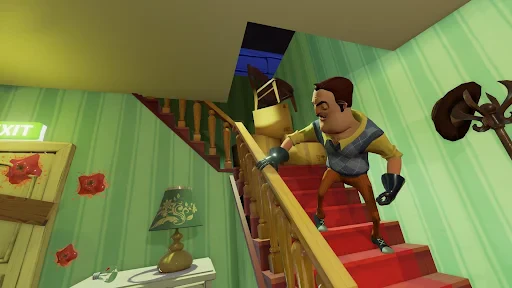

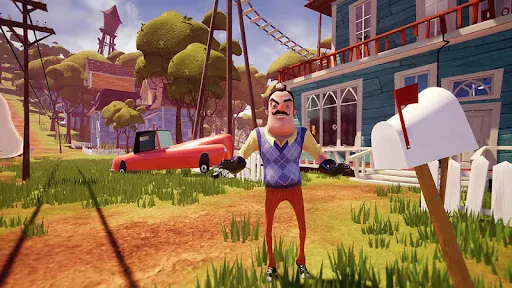
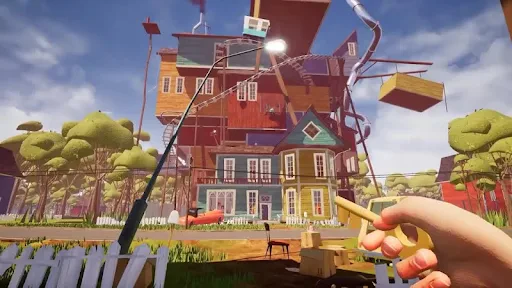
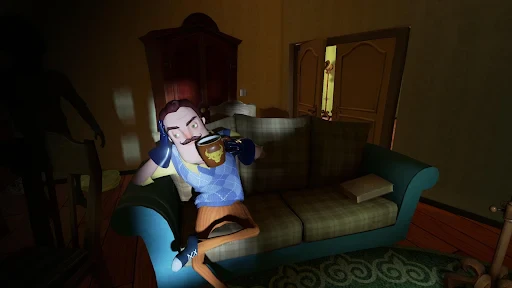
Hello Neighbor: Stealth Horror Game Overview
Hello Neighbor is a stealth horror game developed by Dynamic Pixels, where players must break into their neighbor's house to uncover a dark secret hidden in the basement. The game features an AI-driven neighbor who learns from your actions, adapts his strategies, and sets increasingly complex traps. Available on Google Play and Apple App Store, it combines puzzle-solving, resource management, and suspenseful gameplay in a vibrant, cartoonish art style. The core loop involves sneaking, hiding, and outsmarting the unpredictable neighbor to progress through rooms, solve environmental puzzles, and avoid detection.
Chapter 1: Function
The game’s core functions center on stealth mechanics and dynamic AI behavior. Players navigate a multi-story house, collecting keys, tools, and items to unlock doors, disable traps, and access new areas. The neighbor uses advanced AI to patrol, set traps like bear traps and cameras, and chase the player when alerted. Players can hide in closets, under beds, or behind furniture, and use distractions such as throwing objects to mislead the neighbor. The environment is fully interactive, allowing players to move furniture, open windows, and break barriers. Each playthrough modifies neighbor behavior based on player patterns, making repeated attempts unique. Progression requires solving logic puzzles, such as finding combinations for safes or aligning symbols, while managing a stamina bar for sprinting. The game offers multiple chapters, each expanding the house layout and introducing new threats like dogs or locked rooms. A sandbox mode allows creative trap-setting, and a story mode drives the narrative forward. The interface is simple, with contextual buttons for interaction, inventory management, and a minimap for orientation. Audio cues, such as the neighbor’s footsteps or vocal reactions, provide critical feedback for decision-making. These functions ensure a tense, replayable experience that rewards patience and strategic thinking.
Chapter 2: Value
Hello Neighbor delivers unique value through its adaptive AI and innovative approach to horror. Unlike scripted horror games, each player’s actions shape the neighbor’s responses, creating a personalized difficulty curve that prevents predictability. This fosters a sense of agency and challenge, as no two playthroughs are identical. The game’s art style contrasts with its tense themes, using bright colors and exaggerated character models to soften the horror, making it accessible to younger players and those new to the genre. Its value also lies in cognitive engagement: players must analyze patterns, plan routes, and adapt under pressure, enhancing problem-solving skills. The narrative, while simple, encourages exploration and curiosity, as the mystery of the neighbor’s past unfolds through environmental storytelling. For families, the game offers cooperative discussion on strategy and observation, promoting shared problem-solving. On mobile platforms, its short session lengths suit on-the-go play, with checkpoints saving progress efficiently. The sandbox mode extends replayability, allowing creative freedom to design custom scenarios. Additionally, regular updates and community challenges sustain interest over time. Compared to competitors, Hello Neighbor’s focus on dynamic, non-linear gameplay sets it apart from linear horror titles, offering a fresh experience each session. Its key advantages include intuitive controls optimized for touchscreens, cloud save support, and absence of intrusive ads in the paid version. This combination of adaptive challenge, accessible horror, and cognitive stimulation makes it a standout in the mobile gaming market.
Chapter 3: Scenarios
The app primarily targets casual and young gamers aged 9 to 16 who enjoy puzzle-solving and mild suspense, but it also appeals to adults seeking a lighter horror experience. Primary use cases include solo play during short commutes or breaks, where players complete a single puzzle or explore a new room within 15 minutes. In family settings, siblings or friends often take turns controlling the character, debating strategies to evade the neighbor. Educational scenarios occur in home learning, where parents use the game to teach pattern recognition, planning, and risk assessment. Content creators on platforms like YouTube and TikTok use the game’s unpredictable AI to generate humorous or tense clips, driving community engagement. Another common scenario is multiplayer discussion groups, where players share tips and hidden secrets, fostering social interaction. For travelers, the game’s offline mode provides entertainment without data usage. Scenarios requiring focus, such as waiting rooms or public transit, benefit from the game’s pause-friendly design. Additionally, the sandbox mode is used by hobbyists to design elaborate trap systems, sharing designs online. The neighbor’s adaptive behavior ensures that even repeated play sessions feel fresh, making it a staple for gamers who value variety. Overall, Hello Neighbor fits seamlessly into daily routines, offering a balance of challenge and accessibility for diverse audiences.
Advantages
- stealth mechanics require learning AI behavior patterns
- physics-based puzzles offer emergent problem-solving
- neighbor’s AI adapts to player tactics over time
- open-ended house exploration with no linear paths
- cartoony art style masks genuinely tense atmosphere
Disadvantages
- AI unpredictability can feel unfair without clear cues
- limited save points disrupt long play sessions
- puzzle logic occasionally relies on obscure triggers
- performance dips on lower-end hardware during chases
- multiplayer mode lacks dedicated server support
Frequently Asked Questions
Q: What is the core gameplay of Hello Neighbor?
A: Hello Neighbor is a stealth horror puzzle game where you attempt to break into your neighbor's house to uncover a hidden secret. The core gameplay involves sneaking, solving environmental puzzles, and avoiding the AI-driven neighbor who learns from your actions and adapts his defenses. There is no combat focus; evasion and strategy are key.
Q: Is Hello Neighbor free to play or does it require purchases?
A: Hello Neighbor is a paid app with an upfront purchase price. It does not feature in-app purchases for core content, though some platforms may offer additional paid DLCs or cosmetic items. No subscription is required. Check your app store for the exact price, as it varies by region.
Q: Which devices and systems support Hello Neighbor?
A: Hello Neighbor is available on iOS, Android, PC, console platforms like PlayStation and Xbox, and Nintendo Switch. For mobile, it requires at least iOS 12 or Android 8.0 with 4GB RAM. Older devices may experience performance issues due to the AI and physics demands. Check official system requirements before purchasing.
Q: How does the neighbor AI actually work in gameplay?
A: The neighbor AI uses a learning system that tracks your previous strategies and adjusts his patrol routes, trap placements, and reactions accordingly. If you always use the same entrance, he will watch it more. This makes repeated playthroughs unpredictable. You must vary your approach to outsmart him, though the learning is not infinite and has limits.
Q: Can I play Hello Neighbor offline without internet?
A: Yes, Hello Neighbor is primarily a single-player game and can be played entirely offline after the initial download and installation. No internet connection is required for the core campaign. However, leaderboards, cloud saves, or any future multiplayer modes may require an online connection for specific features.
Technical Information
Recommended for You

Idle Lumber Empire: Tycoon Inc

Backgammon - Lord of the Board
War Regions - Tactical Game

Math Games: Math for Kids

Viking Rise

Top War: Battle Game

Layer Man 3D: Run & Collect

My Talking Tom

Highway Overtake - Car Racing

Stack the States® 2

Bounty Of One: Premium

Woodoku - Wood Block Puzzle

Numberblocks Treasure Hunt

Muse Dash

Black Border Patrol Simulator

The Baby In Yellow

Music Night Battle - Full Mods

Hit Master 3D - Knife Assassin

Lucy: Makeup and Dress up

Rhythm Hive

Stunt Car Extreme

Music Piano 7: Rush Song Games

Backpacker™ Go!
