iNaturalist

iNaturalist
Social network for nature lovers to identify and share wildlife
Screenshots
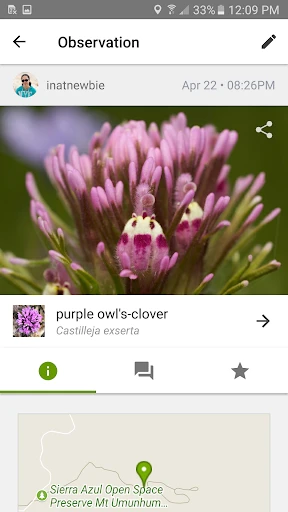
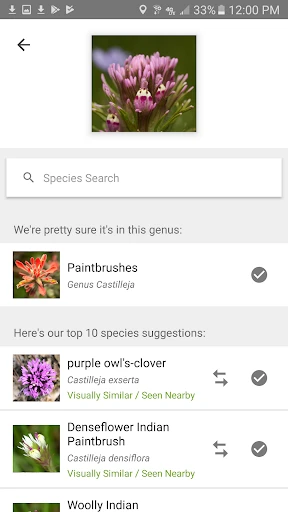
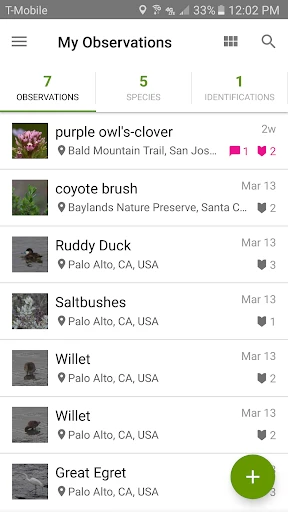
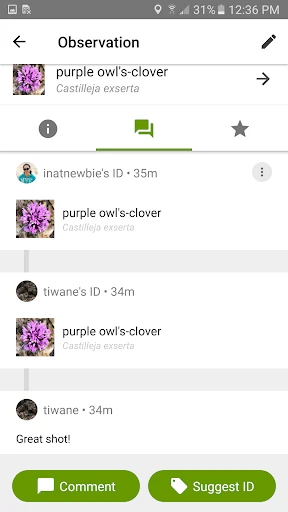
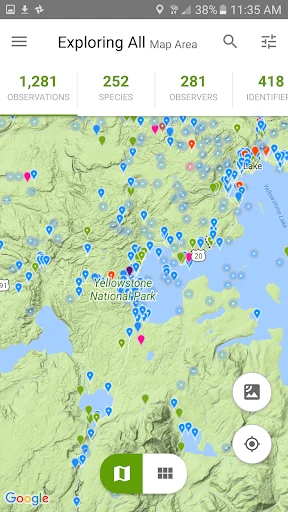
iNaturalist Explore and Document the Natural World
iNaturalist is a social network for nature enthusiasts, designed to help users identify plants, animals, fungi, and other organisms through image recognition technology and community expertise. It serves as a collaborative platform where citizen scientists, hikers, gardeners, and educators can record their observations, learn about biodiversity, and contribute to global conservation research. The app is free to use and integrates seamlessly with global databases like the Global Biodiversity Information Facility (GBIF), making it a powerful tool for both personal exploration and scientific data collection.
Chapter 1: Function
The core function of iNaturalist is enabling users to capture and identify organisms in their environment. When a user takes a photo or records a sound of a species, the app applies computer vision algorithms to suggest a likely identification. Users can then confirm the ID themselves or submit the observation to the community for peer review. The app allows users to log detailed observations, including location coordinates, date, time, and notes about behavior or habitat. A built-in map feature displays a user's own sightings and those of others nearby. Additionally, the app offers a project-based system where users can join specific bioblitzes or monitoring programs, aggregating data for researchers and conservation organizations. This functionality transforms a simple nature walk into a meaningful data-collection activity.
Chapter 2: Value
The value proposition of iNaturalist lies in its ability to democratize scientific discovery and foster a deeper connection with nature. For individual users, the app removes the barrier of species identification ignorance, turning any curious person into a capable naturalist. This immediate feedback loop encourages outdoor exploration and environmental stewardship. On a broader scale, iNaturalist aggregates millions of verifiable observations annually, serving as a critical resource for ecologists studying species distribution shifts due to climate change, invasive species spread, and habitat loss. The platform also builds a global community of experts and amateurs who collaborate to validate data, creating a self-correcting system of quality control. Unlike many social media platforms, its primary value is not entertainment but education and ecological impact. Key advantages include its cost free model, its integration with academic institutions, and its ability to function offline, allowing data collection in remote areas. The app empowers users to contribute to real science without requiring formal training, making it a unique bridge between the public and professional research.
Chapter 3: Scenarios
The primary target user groups of iNaturalist include amateur naturalists, hikers, campers, gardeners, birdwatchers, educators, students, and professional biologists. A typical use case is a hiker encountering an unfamiliar wildflower in a national park: she photographs the bloom, receives an instant AI suggestion, and later confirms the identification with community feedback. Another scenario involves a middle school science teacher guiding students on a schoolyard bioblitz, where each student documents local insects and plants to create a class biodiversity report. Gardeners use the app to identify pests or beneficial insects, while birdwatchers log seasonal sightings to track migration patterns. In a conservation context, a park ranger might use iNaturalist to document rare species in a protected area, contributing data directly to regional management plans. The app also supports research scenarios, such as a marine biologist cataloging intertidal life during a low tide survey. For urban users, simply identifying weeds growing through sidewalk cracks can spark curiosity about local ecology. The app fits seamlessly into daily life, transforming routine moments of noticing nature into actionable, scientific contributions.
Advantages
- citizen science data directly aids biodiversity research
- AI species recognition works offline in remote areas
- global community verifies observations for accuracy
- auto-geotagging maps sightings on real-time species grid
- computer vision model updates with new user uploads
Disadvantages
- heavy battery drain during continuous camera/AR use
- AI misidentifies uncommon or juvenile specimens frequently
- requires cellular data for syncing when offline
- rare species locations exposed publicly due to open data
- interface lags on low-end Android devices
Frequently Asked Questions
Q: What is iNaturalist and what does it do?
A: iNaturalist is a social network for nature enthusiasts that helps users identify plants, animals, and fungi through image recognition and community input. Core functions include uploading photos for ID suggestions from an AI model, browsing species observations globally, and contributing to biodiversity citizen science. No special equipment is needed beyond a smartphone camera.
Q: Is iNaturalist free to use or does it have in-app purchases?
A: iNaturalist is completely free to download and use. There are no in-app purchases, subscription fees, or hidden costs. All core features including species identification, observation recording, and community interaction are accessible without payment. Users only need internet access for uploading and syncing data.
Q: Does iNaturalist work offline or require constant internet?
A: iNaturalist offers limited offline functionality. You can take photos and log observations without internet, which are saved locally and uploaded when connected. However, species identification via AI and community feedback requires an active internet connection for data processing. Basic browsing of cached content works offline.
Q: How accurate is iNaturalist’s species identification feature?
A: The AI identification provides suggestions based on visual patterns and geographic location, with accuracy varying by species and photo quality. It typically suggests the top 10 possible matches. Final confirmation relies on community experts or manual verification. Rare or poorly photographed species may yield lower accuracy. No guarantee of correct ID is given.
Q: Can I use iNaturalist on multiple devices and sync data?
A: Yes, iNaturalist syncs data across devices via your account. Observations, favorites, and profile settings are automatically updated on both mobile apps (iOS and Android) and the website. There is no limit on device number. Simply log in with the same account on each device to maintain continuity. No manual backup is required.
Technical Information
Recommended for You

RISER - the motorcycle app

Skechers

Kraken: Buy Stocks & Crypto

Centi PRO - Currency Converter

Vocabulary - Learn words daily

مایکت فیلم | Myket Film

FlashGo: Fake GPS Location
FoxEyes - Change Eye Color

ViX: TV, Deportes y Noticias

CryptoTiles - Prices & Charts

Floor Plan Creator
EOBD Facile: OBD 2 Car Scanner

Flowt Wear

Holy Quran - Offline Quran MP3

Gauth: AI Study Companion

Doctor On Demand

Vargo Anesthesia Mega App

Inbox Homescreen

Mirror App - Makeup Mirror

eDrawings

Cleaner Junk & Photo Recovery

Stoxy PRO - Stock Market Live

Hushed: US Second Phone Number
