Star Walk 2 Plus: Sky Map View

Star Walk 2 Plus: Sky Map View
Star Walk 2 Plus: Sky Map View Learn stars planets guide sky for astronomy lovers
Screenshots
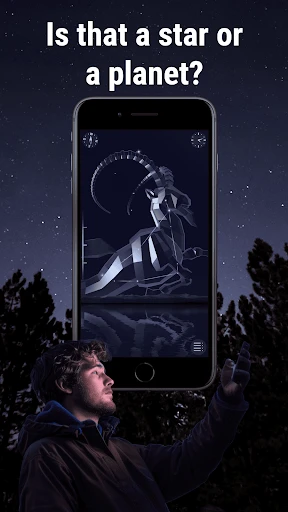
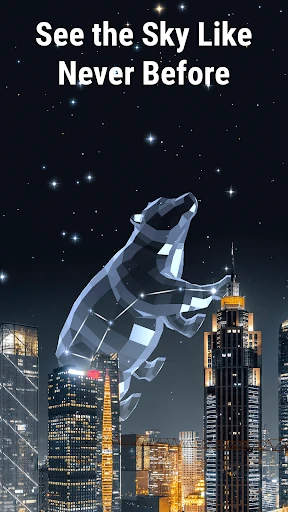

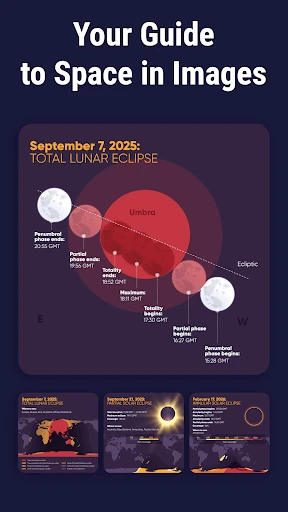

Star Walk 2 Plus: Sky Map View - Explore the Universe from Your Pocket
Star Walk 2 Plus is a premium astronomy app that transforms your smartphone or tablet into a dynamic planetarium. By leveraging your device sensors and high-quality graphics, it provides an immersive, real-time sky map. Users can identify stars, planets, constellations, satellites, and deep-sky objects simply by pointing their device at the sky. The app combines educational content with stunning visuals, making space exploration accessible and engaging for all ages. Its core mission is to demystify the night sky through interactive learning and precise astronomical data.
Chapter 1: Function
Star Walk 2 Plus offers a suite of core features designed for seamless sky observation. The primary function is the live sky view, which uses GPS, gyroscope, and accelerometer to overlay celestial objects on the screen in real time as you move your device. Users can tap any star, planet, or satellite to access detailed information including name, distance, magnitude, and astronomical facts. The app includes a powerful time machine function, allowing you to fast-forward or rewind the sky to see celestial positions at past or future dates. It also provides notifications for key astronomical events, such as meteor showers, eclipses, and planetary conjunctions. Additionally, the app features an augmented reality mode for an immersive experience, and a comprehensive search tool to locate specific objects in the sky with directional guidance. All content is fully offline accessible after initial download.
Chapter 2: Value
The value proposition of Star Walk 2 Plus lies in its ability to bridge the gap between casual curiosity and serious astronomical knowledge, offering several key advantages. First, it provides unparalleled educational value by turning passive stargazing into an interactive learning experience. Each object comes with curated Wikipedia-style articles and infographics, helping users understand astrophysical concepts without prior expertise. Second, its precision and reliability set it apart. The app uses data from authoritative sources like NASA and ESA, ensuring star positions, satellite trajectories, and ephemeris calculations are accurate to the minute. This is crucial for both amateur astronomers planning observation sessions and educators giving demonstrations. Third, the user experience is optimized for immediacy and beauty. The interface is intuitive, requiring no manual calibration, and the high-definition 3D models of planets and nebulae create a visually stunning experience that encourages repeated use. Fourth, the time machine feature offers unique value: it allows users to simulate historical sky events, such as ancient supernovae, or plan future observations of rare alignments. The ad-free, premium nature also guarantees uninterrupted immersion. Overall, the app transforms a complex subject into a personal, portable observatory that adapts to the user's learning pace.
Chapter 3: Scenarios
Star Walk 2 Plus serves a diverse range of target user groups and everyday use cases. Primary users include amateur astronomers and night-sky enthusiasts who use it for planning and supplementing telescope sessions, as it quickly identifies objects and provides key observation data. A second major group is families with children; parents use the app during backyard outings or camping trips to answer children's questions about stars and planets, turning a simple night sky into an engaging science lesson. Educators and students from upper elementary to high school levels also rely on the app as a visual aid for lessons on astronomy, physics, and geography, using the time machine to model seasonal changes and orbital mechanics. Casual users, such as hikers and campers, find value in identifying bright stars and planets without equipment during evening activities. Travelers in rural areas with low light pollution use the app to explore unfamiliar constellations. Additionally, social users leverage it as an icebreaker at night events, quickly showing friends the real names of stars and enhancing outdoor social experiences. All use cases share the common need for immediate, accurate, and intuitive sky identification without complex setup.
Advantages
- real-time AR overlay matches stars to your camera view
- identifies satellites and ISS flyovers with precise timing
- works offline with pre-downloaded sky maps and data
- time machine feature lets you simulate past/future star positions
- 3D model of celestial bodies rotates as you tilt your device
Disadvantages
- heavy battery drain during AR sky tracking sessions
- bright city lights severely reduce star detection accuracy
- subscription required for full deep-sky object catalog
- moon phase feature lags by one hour after midnight
- no native stargazing community or social sharing tools
Frequently Asked Questions
Q: What does Star Walk 2 Plus do exactly?
A: Star Walk 2 Plus is an augmented reality sky map app that identifies stars, planets, constellations, satellites, and deep-sky objects in real time. Point your device at the sky, and the app overlays labeled celestial bodies on the live camera view. It includes a time machine feature to simulate sky positions past or future, detailed 3D models, and educational articles. No internet connection is needed for basic stargazing once the database is loaded.
Q: Is Star Walk 2 Plus free to use?
A: The app requires a one-time purchase, with no recurring subscriptions. There are no in-app ads or additional fees for core features like AR mode, sky object database, and time machine. However, some premium content—such as deep-sky object packs or detailed satellite tracking—may be sold separately. No extra hardware like a telescope is needed; a smartphone or tablet with a gyroscope sensor suffices.
Q: Does it work on all smartphones and tablets?
A: Star Walk 2 Plus runs on iOS 11.0 or later and Android 5.0 (Lollipop) and up. It requires a device with a gyroscope sensor for accurate AR pointing—phones or tablets lacking this may only use manual scrolling. It is optimized for both phones and tablets, but does not support smartwatches, VR headsets, or desktop computers. Offline mode works after initial data download.
Q: How accurate is the star identification during daytime?
A: Daytime star identification is unreliable due to bright sunlight washing out faint stars. The app can technically show the sun, moon, and bright planets (e.g., Venus, Jupiter) if you point the device at their estimated location, but most stars are invisible. For best results, use at night in clear, low-light-pollution skies. The app’s database provides precise coordinates, but practical visibility depends on ambient light and weather.
Q: Can I share or export my observations?
A: Yes, you can take a screenshot of the current sky view (with or without AR overlay) and share it directly via email, messaging apps, or social media. The app also allows you to save favorite objects to a personal list, but it does not export observation logs in standard formats like CSV or KML. For astronomical recording, use the built-in notes feature—no external API or cloud sync is available.
Technical Information
Recommended for You

Trip.com: Book Flights, Hotels

OTTO Tv - Video Player

Avalanche Inclinometer

Chipotle

Caesars Rewards Resort Offers

Messages

Asiacell

Connects: Arts+Culture

MediBang Paint:Draw Art, Comic

Holy Bible - KJV+Verse

NHRA.TV

Video Voice Changer + Effects

BlueDriver OBD2 Scan Tool

Piano - Play Unlimited songs

BATTLE ROYALE CHAPTER 5

Hipcamp: Camping, RVs & Cabins
Reels Maker for Instagram BEAT

PDF Reader and Photo to PDF

Intuit Credit Karma

My crochet designer

Remote Control for TV - All TV

OnStar Guardian: Safety App

Shop Samsung