Sky Map

Sky Map
Sky Map star finder lets you explore constellations easily
Screenshots
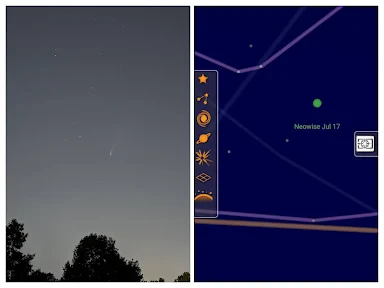

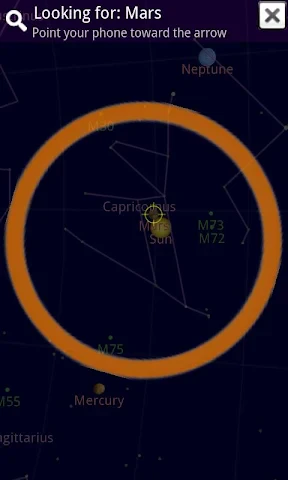
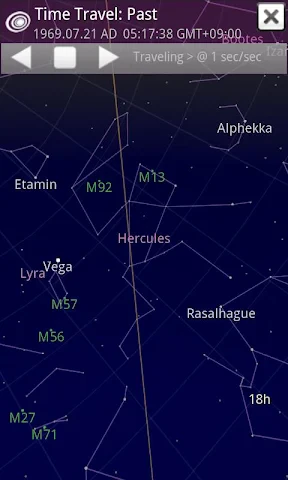
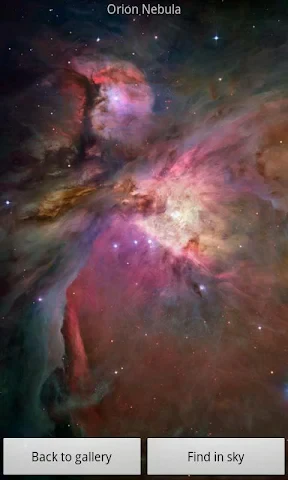
Sky Map: Explore the Universe with Your Device
Sky Map is a free, open-source astronomy application that transforms your smartphone or tablet into a window to the stars. Developed initially by Google and now maintained by a community of contributors, it uses your device's sensors to identify celestial objects in real time. Simply point your device at the sky, and the app displays the names of stars, planets, constellations, and galaxies you are viewing. Its intuitive interface requires no prior astronomy knowledge, making it accessible for beginners and enthusiasts alike. The app operates offline after initial data download, ensuring usability in remote locations. Sky Map emphasizes simplicity, accuracy, and educational value, providing a direct and engaging way to learn about the night sky.
Chapter 1: Function
Sky Map’s core function is real-time celestial identification through augmented reality overlay. The app utilizes a device's accelerometer, gyroscope, and compass to track orientation and position. When a user points their phone upward, the screen displays a dynamic map of the sky, with labels for stars, planets, constellations, and deep-sky objects. Users can search for specific objects, such as Mars or the Andromeda Galaxy, and the app provides directional arrows to guide the user’s view. Additional functions include a time-travel feature that allows users to visualize the sky at any past or future date, and a manual mode for browsing the map without moving the device. The interface is minimal, avoiding clutter, and supports brightness adjustment for night-time viewing. Its offline capability ensures functionality even without internet access.
Chapter 2: Value
Sky Map’s primary value lies in democratizing access to astronomical knowledge and fostering curiosity about the universe. Unlike complex telescope software or subscription-based planetarium apps, Sky Map is entirely free and open-source, removing financial barriers. Its instant recognition capability educates users in seconds, turning a casual glance at the night sky into a learning moment. The app promotes STEM education by making astronomy tangible and interactive, which is especially valuable for students, educators, and parents seeking engaging science activities. A key advantage is its seamless offline functionality, allowing use during camping trips, field research, or in areas with no cellular coverage. The time-travel feature enables users to plan observations or revisit historical celestial events, adding depth to both casual stargazing and academic study. Moreover, as open-source software, Sky Map benefits from community-driven updates and transparency, ensuring no hidden costs or data privacy concerns. Its minimalist design reduces battery drain and cognitive load, allowing users to focus on the sky without distractions. By providing accurate, real-time mapping without requiring expensive equipment, Sky Map empowers anyone with a smartphone to understand their cosmic context, nurturing a sense of wonder and scientific literacy that enriches daily life.
Chapter 3: Scenarios
Sky Map serves a diverse user base ranging from curious beginners to experienced amateur astronomers. Its primary target groups include students and educators who use it as a teaching tool in classrooms or during outdoor science lessons. Families find it invaluable for evening stargazing, helping children identify constellations and planets in their backyard. Campers, hikers, and travelers rely on Sky Map when exploring remote areas without internet service. The app is also popular among amateur astronomy club members during group observation sessions, as it quickly clarifies which objects are visible and where to look. Everyday use cases include a person stepping outside to identify a bright star after sunset, a teacher guiding students to locate Jupiter during a school trip, or a parent answering a child’s question about the “big dipper” while camping. Additionally, hobbyists planning photography sessions use the time-travel feature to predict the position of the Milky Way or a specific planetary alignment. The app is suitable for any scenario where a quick, accurate, and portable sky reference is needed, without the complexity of professional software.
Advantages
- real-time sky tracking using phone sensors
- offline star maps work without internet
- open-source code allows custom modifications
- simple swipe gesture to navigate constellations
- displays visible planets based on your location
Disadvantages
- limited to basic star names
- no deep-sky details
- ads appear on free version during usage
- sensor accuracy drops near magnetic interference
- no augmented reality overlay for live view
- only covers northern hemisphere stars comprehensively
Frequently Asked Questions
Q: What core function does Sky Map provide for users?
A: Sky Map is a free astronomy app that uses your device's sensors to display stars, planets, constellations, and other celestial objects in real-time based on your location. Point your phone at the sky, and it overlays an interactive map matching what you see, no internet connection required for basic stargazing.
Q: Is Sky Map free to use with no hidden fees?
A: Yes, Sky Map is completely free with no in-app purchases or subscription fees. Developed originally by Google and now open-source, it relies solely on device sensors. No additional equipment or permissions beyond location and camera (optional for compass calibration) are needed.
Q: Does Sky Map work offline on all Android devices?
A: Sky Map works fully offline for core stargazing after initial download. It requires Android 5.0 or later and a built-in compass and accelerometer. It does not support iOS or tablets without these sensors. Older devices may need manual compass calibration for accuracy.
Q: How accurate is Sky Map's object identification?
A: Accuracy depends on your device's sensor quality and proper compass calibration. In ideal conditions, it points within a few degrees of celestial objects. However, near strong magnetic interference (e.g., metal structures) or without calibration, the alignment may drift. It cannot identify satellites or very dim deep-sky objects.
Q: Can I adjust Sky Map's time to view past or future sky positions?
A: Yes, Sky Map includes a time-travel feature allowing you to manually set any date and time to view the sky's position from the past or future. This works offline and is useful for planning observations or learning how constellations shift over seasons. No live tracking mode is available for moving objects like satellites.
Technical Information
Recommended for You

PassWarrior - Montana

Thumbnail Maker - Channel art

TeamViewer QuickSupport

Photo Music & Video Maker

DairyBar

KAPI

background video recorder

Bible en français courant

Joyread

Google NotebookLM

Coin Value - Coin Identifier

DMV Permit Practice Test 2025

Zoom Workplace

Videa: AI Video Maker, Effects

EasyCut - Video Editor & Maker

KCL: Coupons, Deals, Discounts

Watch Duty (Wildfire)

Drivers Permit Practice
Radio Garden

Pregnancy + | Tracker App

Vacasa - Vacation Rentals

Maps Driving Directions

TOI English News, Daily ePaper