Infocar - OBD2 ELM Scanner

Infocar - OBD2 ELM Scanner
Infocar OBD2 scanner diagnoses car issues for drivers
Screenshots
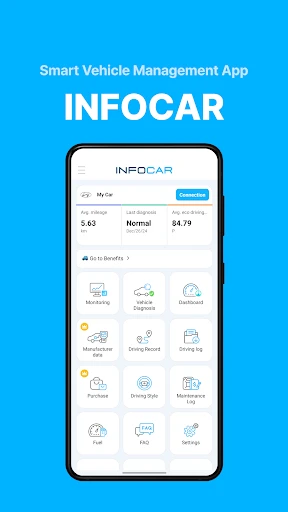
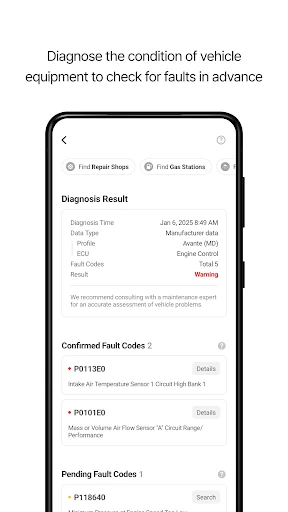
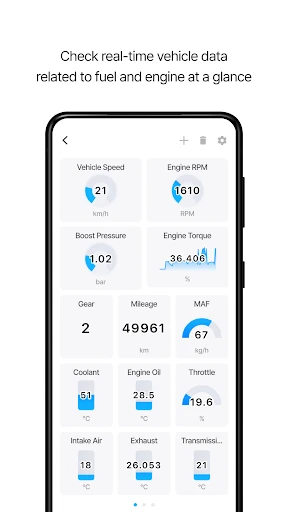
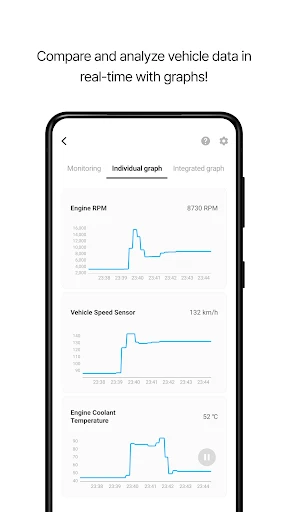

Infocar - OBD2 ELM Scanner: Real-Time Vehicle Diagnostics and Performance Monitoring
Infocar - OBD2 ELM Scanner is a mobile application designed to transform a smartphone or tablet into a comprehensive vehicle diagnostic tool. By connecting to an external OBD2 ELM327 Bluetooth or Wi-Fi adapter, the app reads data directly from a car's Engine Control Unit. It provides real-time monitoring of engine parameters, reads and clears diagnostic trouble codes, and offers graphical displays of sensor data. The app supports a wide range of OBD2 protocols and is compatible with most gasoline and diesel vehicles manufactured after 1996. Its interface is optimized for both novice drivers and experienced mechanics, offering customizable dashboards and data logging capabilities. The primary goal of Infocar is to make professional-grade diagnostics accessible and affordable, enabling users to understand their vehicle's health, improve fuel efficiency, and reduce maintenance costs through early problem detection.
Chapter 1: Function
Infocar serves as a multifunctional vehicle diagnostic scanner focused on retrieving and interpreting OBD2 data. Its core function is to establish a stable connection with an ELM327 adapter, after which it automatically identifies the vehicle's ECU and begins streaming real-time parameters such as engine RPM, coolant temperature, intake air temperature, fuel pressure, and oxygen sensor readings. The app includes a built-in DTC library that translates fault codes into plain language descriptions, allowing users to understand issues without specialized knowledge. Users can freeze frame data capturing the vehicle state at the moment a fault occurred. Additionally, Infocar provides performance testing capabilities, including 0-60 mph or 0-100 km/h acceleration timing, horsepower estimation, and fuel consumption tracking. The application features a trip log function that records speed, distance, and fuel usage for each journey. For advanced users, it supports custom gauge layouts and graphing modes to visualize sensor trends over time. The software also offers a smog check readiness monitor, verifying that emission-related sensors are operational before a vehicle inspection.
Chapter 2: Value
The value proposition of Infocar lies in its ability to democratize vehicle diagnostics, saving users significant time and money while enhancing car knowledge. Traditional diagnostic tool costs can range from hundreds to thousands of dollars, but Infocar leverages a low-cost ELM327 adapter and a user's existing mobile device to deliver comparable functionality. This allows car owners to perform preliminary diagnostics at home, avoiding unnecessary mechanic visits for trivial issues like a loose gas cap causing a check engine light. The app's real-time data display enables drivers to understand their vehicle's performance characteristics, such as identifying bad oxygen sensors or failing catalytic converters before they cause further damage. Fuel efficiency optimization is another key advantage, as users can monitor real-time fuel trim data and driving habits to adopt smoother acceleration and better cruising speeds. For fleet managers or frequent travelers, the trip logging feature provides accurate cost analysis per journey. The ability to clear cleared DTCs after repairs confirms that fixes were successful, preventing recurrence of problems. Furthermore, Infocar empowers users during interactions with repair shops, as they can arrive with a preliminary diagnosis and avoid being upsold on unnecessary repairs. The app also serves an educational role, helping users learn about automotive systems through interactive data displays. By facilitating proactive maintenance, Infocar helps prolong vehicle lifespan and maintain resale value.
Chapter 3: Scenarios
Infocar is primarily used by independent car owners who wish to perform their own vehicle inspections, especially those who experience a check engine light illuminating unexpectedly. The app is also used by automotive hobbyists and DIY mechanics who regularly work on multiple vehicles and want a portable diagnostic tool without investing in expensive standalone scanners. Commuters and long-distance drivers utilize Infocar to track fuel efficiency and monitor engine parameters during road trips, ensuring the vehicle is running optimally before and during travel. Small fleet operators and delivery drivers use the app to log trip data and perform quick health checks on their vehicles to minimize downtime. Another target group is pre-purchase car buyers, who connect the app to a potential used car to scan for hidden trouble codes or check the readiness status before completing a transaction. In professional settings, some mobile mechanics and independent repair shops use Infocar as a secondary diagnostic tool for quick assessments when a full scan tool is not immediately available. Common everyday use cases include plugging in the adapter before starting a long journey to verify sensor readings, checking fuel trims after filling up with a different fuel grade, resetting the check engine light after a minor fault repair, and running a smog check readiness test before a vehicle inspection appointment. The app also supports teaching environments, allowing students in automotive courses to observe live data stream interactions with vehicle systems.
Advantages
- real-time engine data without cloud sync delay
- works offline in tunnels or remote areas
- supports both iOS and Android via bluetooth
- reads manufacturer-specific fault codes accurately
- one-tap diagnostic report export as PDF
Disadvantages
- requires compatible OBD2 adapter for basic use
- no integration with hybrid or full EV systems
- live data logging drains phone battery quickly
- limited customer support for non-english users
- some advanced features locked behind subscription
Frequently Asked Questions
Q: What does Infocar OBD2 ELM scanner do?
A: Infocar is a vehicle diagnostics app that connects to an OBD2 ELM327 Bluetooth adapter to read real-time engine data, check diagnostic trouble codes (DTCs), monitor fuel economy, and display sensor information like RPM, coolant temperature, and oxygen sensor levels. It supports both OBD2 and EOBD protocols for most petrol and diesel vehicles manufactured after 2008.
Q: Is the app free or does it require in-app purchases?
A: The app offers a free version with basic OBD2 scanning and dashboard features. Advanced functions such as live graph logging, custom PID monitoring, code clearing, and performance tests require a one-time Pro upgrade. No subscription fees are required. The app does not charge for hardware as it relies on a separately purchased ELM327 adapter.
Q: Can it work with any smartphone or tablet?
A: Infocar is compatible with Android devices running OS 4.4 or higher via Bluetooth. iOS support is limited due to Bluetooth restrictions, but it works on Android phones and tablets with Bluetooth 2.0+ support. It does not support Windows or iOS devices natively. Cellular or GPS function is not required for basic vehicle reading.
Q: How do I connect the OBD2 adapter to the app?
A: First, plug the ELM327 adapter into your vehicle's OBD2 port (usually under the dashboard). Turn the ignition key to the ON position. On your Android device, enable Bluetooth and pair with the adapter named 'OBDII' or similar. Open Infocar and tap 'Connect'. The app should auto-detect the adapter and start displaying data within 5 seconds.
Q: Does clearing trouble codes with this app reset the check engine light permanently?
A: Clearing DTCs via Infocar will temporarily reset the check engine light. However, if the underlying fault persists, the light will reappear after a few driving cycles. This feature is suitable for diagnostics and resetting after repairs, but not for permanently disabling warnings. The app does not modify vehicle ECU firmware or emission controls.
Technical Information
Recommended for You

Video Compressor & Converter

Snapfish: Prints + Photo Books

ASCCP Management Guidelines

Freebie Alerts: Free Stuff App
Fallout Pip-Boy SE Watch Face

Video Editor&Maker - VideoCook

Financial Calculators Pro

Show My Colors: Color Palettes

Leonardo.Ai - Image Generator

RadarScope

inKind

YACReader Remote

NordVPN – fast VPN for privacy

PDF Reader: Edit & Convert PDF

AliExpress - Shopping App

Photo Editor - Retouch Photos

Glam AI

Magic Eraser - Remove Objects

Phantom

Gaia GPS: Offline Trail Maps

Beauty Camera - Selfie Camera

PLAY-DOH Create ABCs

Google Meet